Games for Video Calls: 8 Party Games That Work on Screen
On a call nobody can pass a card, whisper to a teammate or read the room. The games that survive are spoken, turn-based and forgiving of a two-second delay.
The short answer
Games for video calls should be turn-based and spoken, so that a delay does no harm. Twenty Questions, Would You Rather, Two Truths and a Lie, Categories and Odd One Out need only voices; Story Remix and Try Not to Laugh use the camera; Charades works if the actor stands back from the screen.
The games we recommend
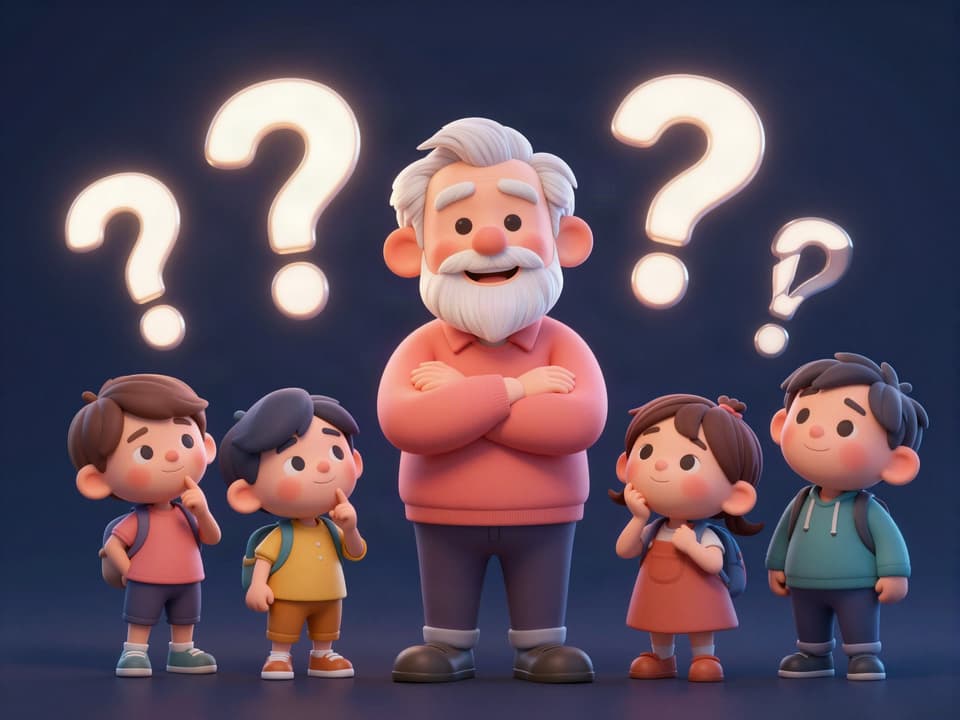
Work out a secret person, place or thing by asking no more than twenty yes-or-no questions.
Why it fits: One person answers and one person asks at a time. A delay of a second or two changes nothing.
- 2–10 players
- 10–25 min
- No materials
- Seated
- Works seated
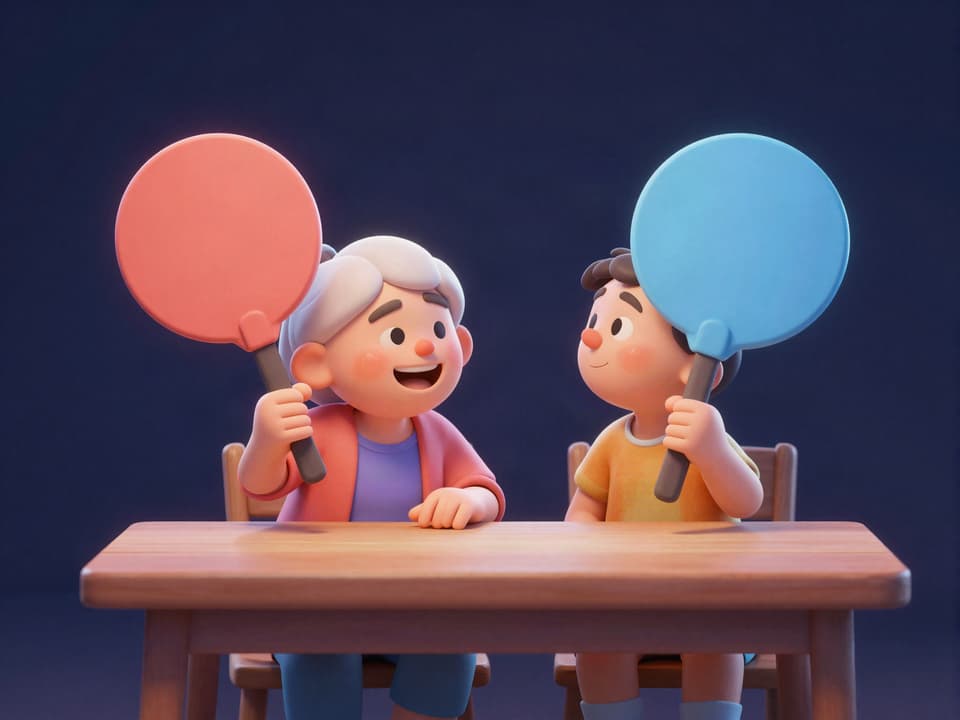
Choose between two alternatives, defend your choice, and find out who at the table thinks the way you do.
Why it fits: Everyone votes by holding up one or two fingers to the camera at the same moment — the screen becomes the scoreboard.
- 2–30 players
- 10–30 min
- No materials
- Seated
- Works seated
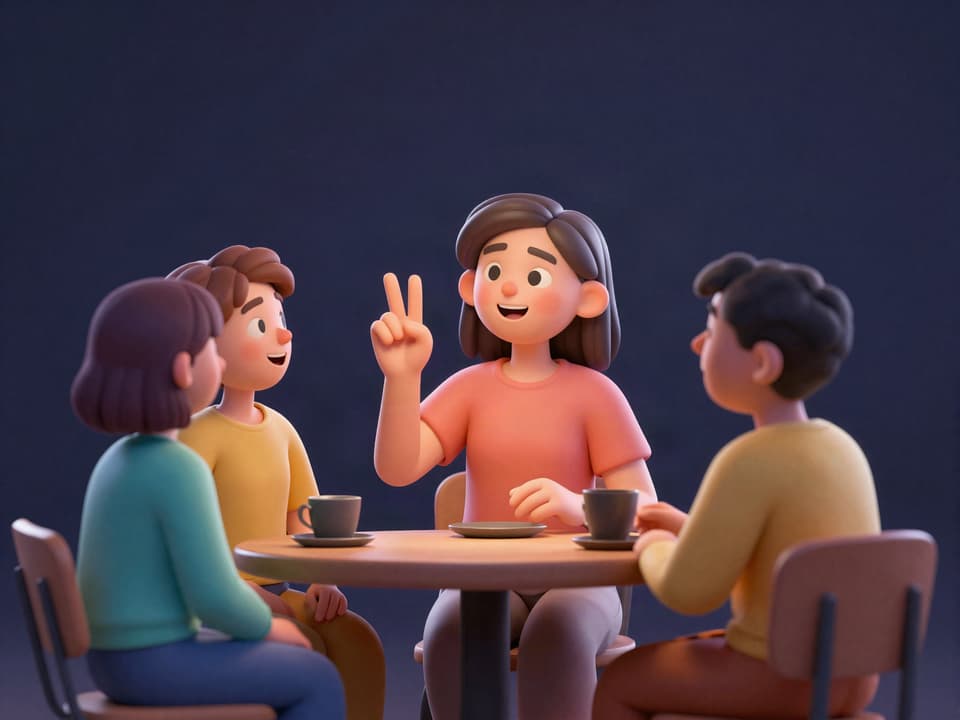
Share three statements about yourself — two true, one invented — and see whether the group can spot the lie.
Why it fits: It is made for faces in boxes: the speaker fills the screen, and everyone votes with their fingers.
- 3–12 players
- 10–30 min
- No materials
- Seated
- Works seated
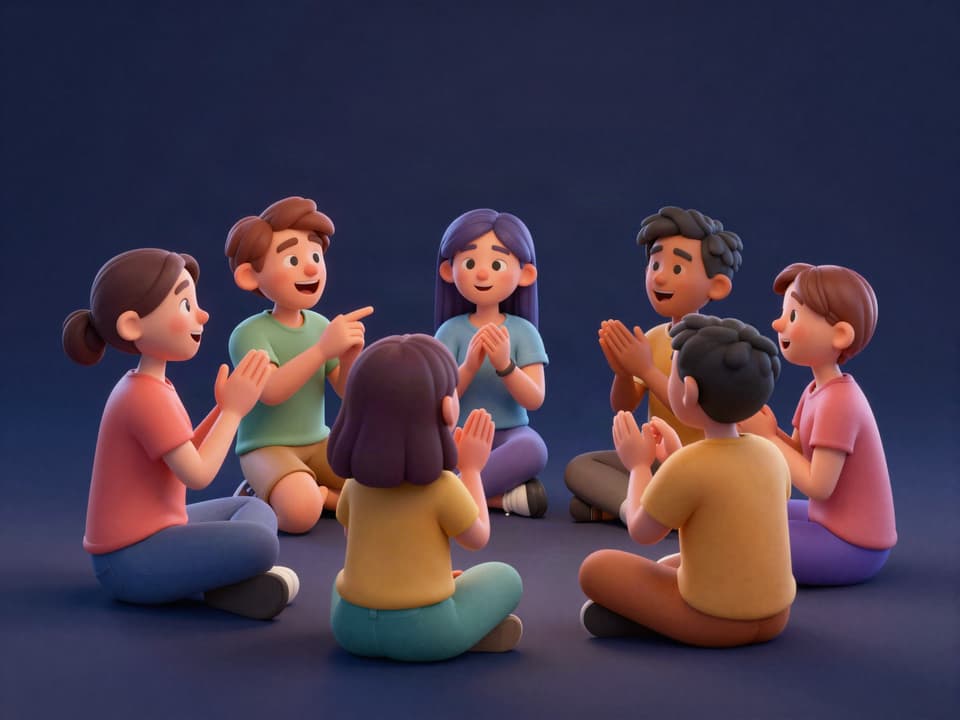
Take turns naming things that fit a category, without repeating an answer or hesitating too long.
Why it fits: Go round in the order of the names on screen. The host calls the order once, and a hesitation is easy to hear.
- 3–12 players
- 10–25 min
- No materials
- Seated
- Works seated
Hear four things, decide which one does not belong, and convince the table that your reason is the best one.
Why it fits: The host reads four things and each household argues for its odd one out. Good when several people share one camera.
- 3–12 players
- 10–25 min
- No materials
- Seated
- Works seated
Retell a simple, everyday story in a surprising style — as a weather forecast, a sports commentary, a bedtime story — and let the group guess the style.
Why it fits: A one-minute performance to a gallery of faces. Send the secret style to the performer by private message.
- 3–10 players
- 15–30 min
- No materials
- Seated
- Works seated
Keep a perfectly straight face while the rest of the table does its best — with words alone — to make you crack.
Why it fits: Pin the straight-face player so that everyone watches the same face. Each caller gets twenty seconds.
- 3–12 players
- 10–20 min
- No materials
- Seated
- Works seated
Act out a word or phrase without speaking so your team can guess it before the timer runs out.
Why it fits: The actor steps back until head and hands are in frame. Prompts go by private message, and each household is a team.
- 4–20 players
- 20–45 min
- No materials
- Standing and moving
- Seated variation
Compare the games at a glance
| Game | Players | Play time | Prep | Materials | Movement | Seated option | Energy |
|---|---|---|---|---|---|---|---|
| Twenty Questions | 2–10 | 10–25 min | No prep | No materials | Seated | Yes | Calm |
| Would You Rather | 2–30 | 10–30 min | No prep | No materials | Seated | Yes | Calm |
| Two Truths and a Lie | 3–12 | 10–30 min | No prep | No materials | Seated | Yes | Calm |
| Categories | 3–12 | 10–25 min | No prep | No materials | Seated | Yes | Lively |
| Odd One Out | 3–12 | 10–25 min | No prep | No materials | Seated | Yes | Calm |
| Story Remix | 3–10 | 15–30 min | 1 min prep | No materials | Seated | Yes | Lively |
| Try Not to Laugh | 3–12 | 10–20 min | No prep | No materials | Seated | Yes | Lively |
| Charades | 4–20 | 20–45 min | 3 min prep | No materials | Standing and moving | Yes | High energy |
Times are editorial estimates, not test results.
More games that suit this occasion
Every other game in the library that is tagged for this occasion.
-
-
-
A forty-minute family call
For three to eight screens. One person hosts and keeps the order of turns. Agree before you start that microphones stay on.
- Step 1 · 8 minutes
Would You Rather
Fingers to the camera on the count of three. Ask one person per question to explain their choice.
- Step 2 · 12 minutes
Twenty Questions
Ask in the order of the names on screen, so that nobody talks over anybody.
- Step 3 · 12 minutes
Two Truths and a Lie
One set of statements per household. Vote by holding up one, two or three fingers.
- Step 4 · 8 minutes
Try Not to Laugh
Pin the straight face. Finish on a laugh and end the call there.
About 40 minutes in total. Times are editorial estimates, not test results.
How we chose these games for video calls
A video call removes most of what makes a party game work: the shared table, the whisper, the glance across the room. What is left is a row of faces, one voice at a time and a slight delay. We chose games against four criteria:
- One voice at a time. Call software lets one person be heard clearly. Games in which a whole team shouts guesses turn into noise, so the picks here are turn-based or use hand signals.
- Delay does no harm. If the fastest answer wins, the player with the best connection wins. These games reward the best answer, not the first.
- Nothing changes hands. No slips in a bowl, no sheets passed round. Anything secret travels by private message.
- A screen is enough. No extra apps, accounts or downloads. The call you are already on is the whole kit.
That rules out some of the library’s best games. Fishbowl, Picture Telephone, The Secret Winker and Reverse Charades all need people in the same room.
What changes on a call
Turn order has to be said out loud. There is no circle, and everyone sees the boxes in a different order. The host reads out an order once — alphabetical, oldest to youngest, east to west — and it stays for the whole call.
Hands replace voices for voting. In Would You Rather and Two Truths and a Lie, everyone holds fingers up to the camera on the count of three. It is quicker than a poll and nobody is drowned out.
Secrets go by private message. The style for Story Remix and the prompt for Charades are sent to one person in the chat. Check before you start that everyone knows where private messages are.
A household can be a team. When three people share one sofa and one camera, treat them as a single player or a single team. It is fairer than pretending they are separate.
Acting needs distance. For Charades the actor steps back until head, arms and hands are all in frame, and says “ready” before starting. Small gestures vanish on a small screen, so ask for big ones.
Setting up the call
- Microphones on. Laughter is most of the game, and a muted call feels like performing to an empty room. Mute only for real background noise.
- Use gallery view. Everyone should see everyone. Pin a single player only for Try Not to Laugh.
- Host from a second device. Keep the host view open on a phone for prompts, and the call on a laptop.
- Mind the time zones. A call that is early evening for one household may be bedtime for another. Agree an end time before you begin.
- Forty minutes is plenty. Calls tire people faster than rooms do. Three or four short games beat one long one.
Questions people ask
Which games do not work on a call?
Anything that passes paper, relies on whispering or needs everyone to shout at once. In this library that means Fishbowl, Picture Telephone, The Secret Winker, Reverse Charades and Secret Word Detective. Team guessing games such as Two-Word Clues can work with two households as the two teams, but only on a stable connection.
How many people is too many?
Above eight screens, turns come round too slowly. Split into two calls, or play whole-group voting games — Would You Rather and Odd One Out — in which everyone answers at the same moment.
Do we need special software?
No. Any call that shows faces and has a private chat is enough. The prompts are on this site and need no account.
Can grandparents who dislike technology join in?
Yes, if someone starts the call for them. Choose games that need nothing but listening and speaking: Twenty Questions and Would You Rather ask nothing of the software at all.
When the call ends and the visit finally happens, the family reunion games collection has games for everyone in one room.