Party Games for Kids: 8 Games Children and Adults Play Together
Children do not need simpler games so much as shorter turns, a job for everyone and an adult who plays too. These eight work from about age six, and none of them needs a trip to the shops.
The short answer
For children of about six to twelve, choose games with short turns and no elimination. Charades, The Secret Winker and Hum That Tune ask for no reading at all; Who Am I?, Picture Telephone, Describe and Draw, One-Word Story and Twenty Questions suit readers and writers, or a child paired with an adult.
The games we recommend
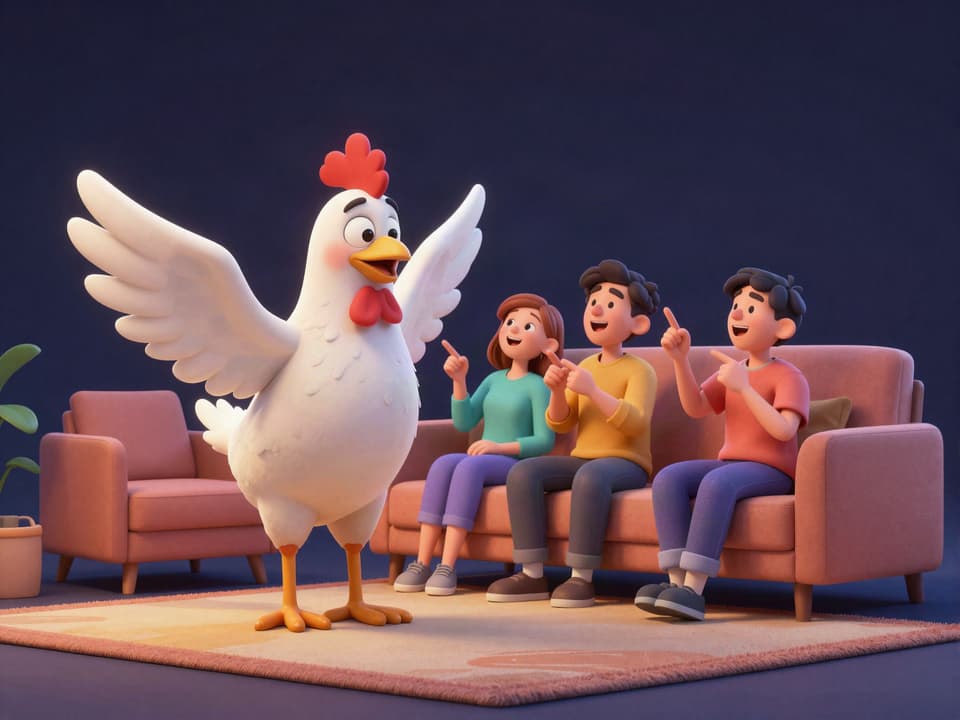
Act out a word or phrase without speaking so your team can guess it before the timer runs out.
Why it fits: Acting is the one skill children have more of than adults. Use the easy cards and whisper the prompt to anyone who cannot read it yet.
- 4–20 players
- 20–45 min
- No materials
- Standing and moving
- Seated variation
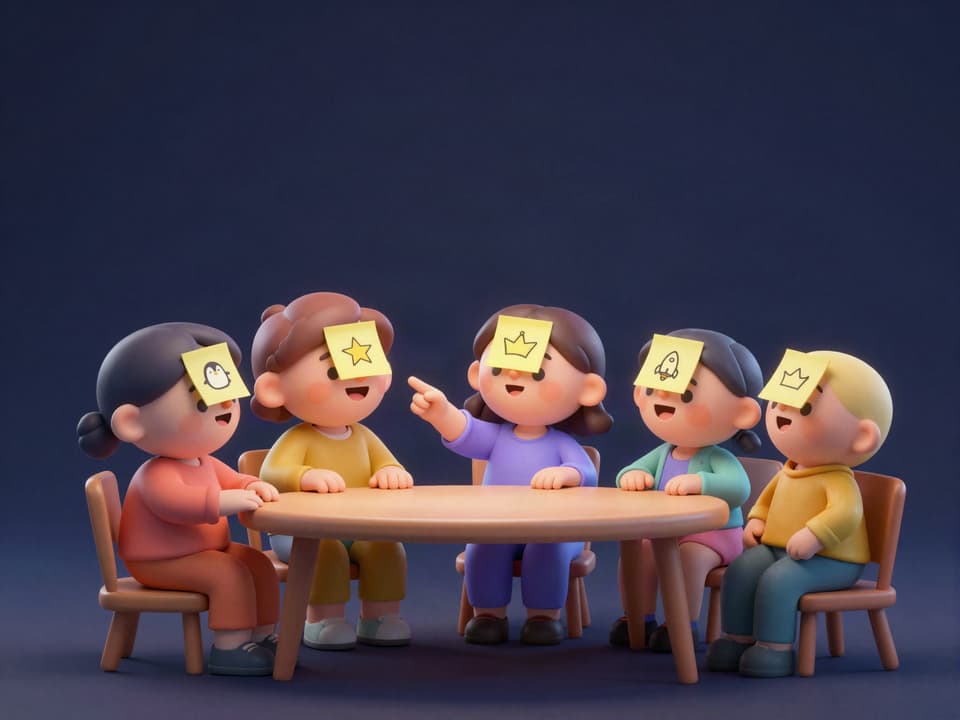
Work out the name stuck to your own forehead — which everyone can see except you — by asking yes-or-no questions.
Why it fits: A name on the forehead and yes-or-no questions: children grasp it in one round, and animals make perfect first names.
- 3–12 players
- 10–25 min
- Paper and pen
- Seated
- Works seated
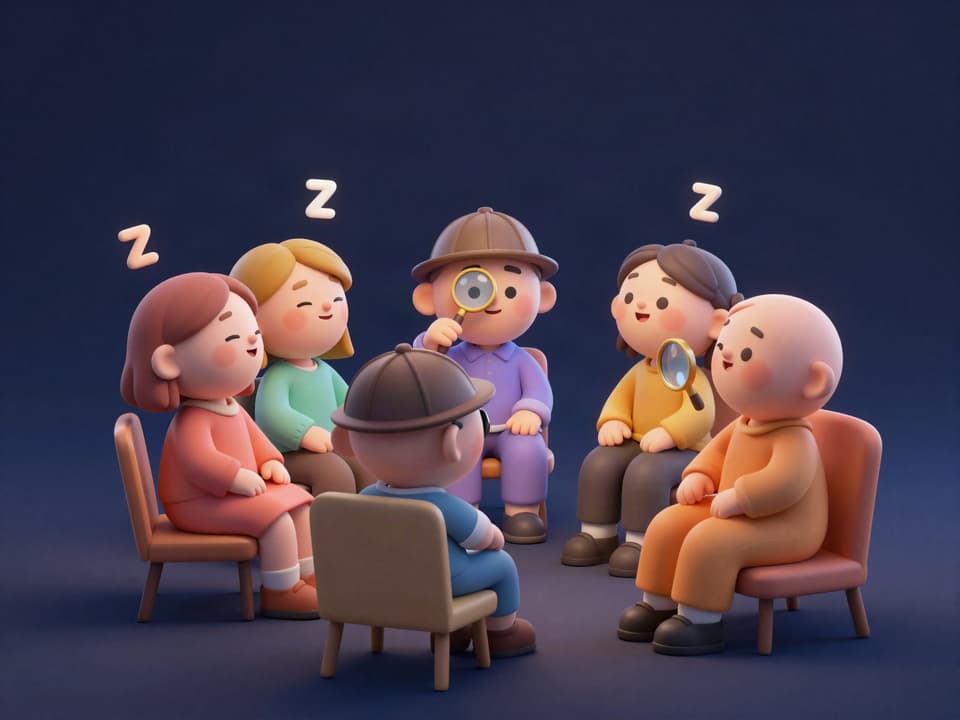
One secret player sends the others to sleep with a wink, while a detective in the middle tries to catch them at it.
Why it fits: The theatrical falling asleep is the part children love, and the detective gets the full attention of the circle.
- 6–20 players
- 10–20 min
- Paper and pen
- Seated
- Works seated

Hum a tune — no words, no la-la — until your team names it.
Why it fits: Nursery songs and cartoon themes put the youngest players ahead of the adults, which is exactly what a mixed table needs.
- 4–16 players
- 10–25 min
- No materials
- Seated
- Works seated
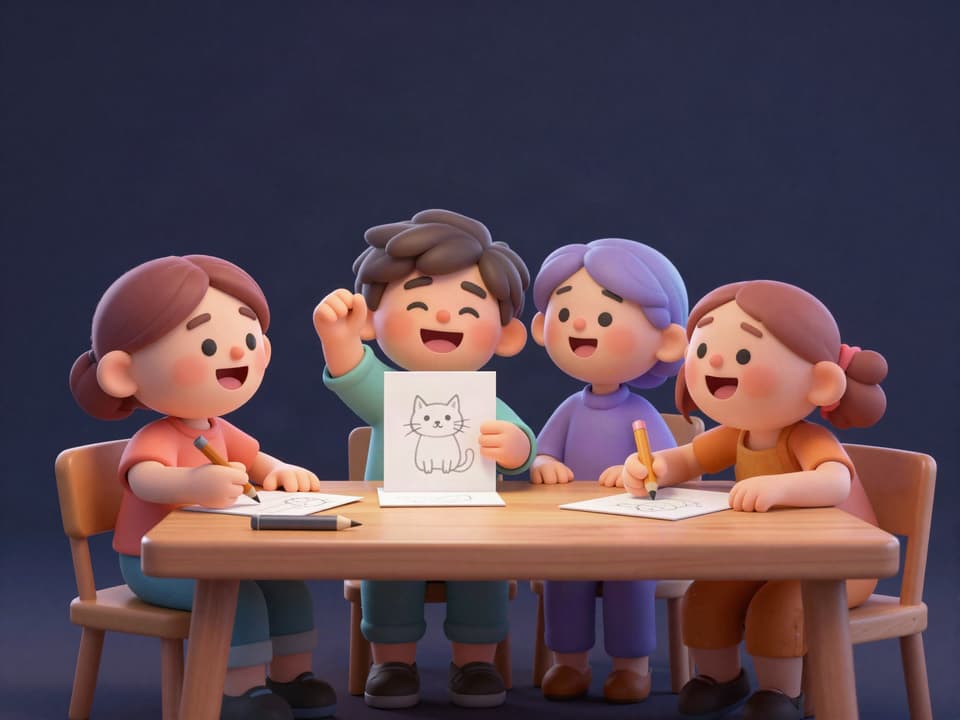
Pass a sentence round the table, turning it into a drawing and then back into words, and see what survives the journey.
Why it fits: Bad drawings are the point, so nobody is the weak link. A child who cannot write yet draws on every turn while a neighbour writes.
- 4–10 players
- 15–30 min
- Paper and pen
- Seated
- Works seated
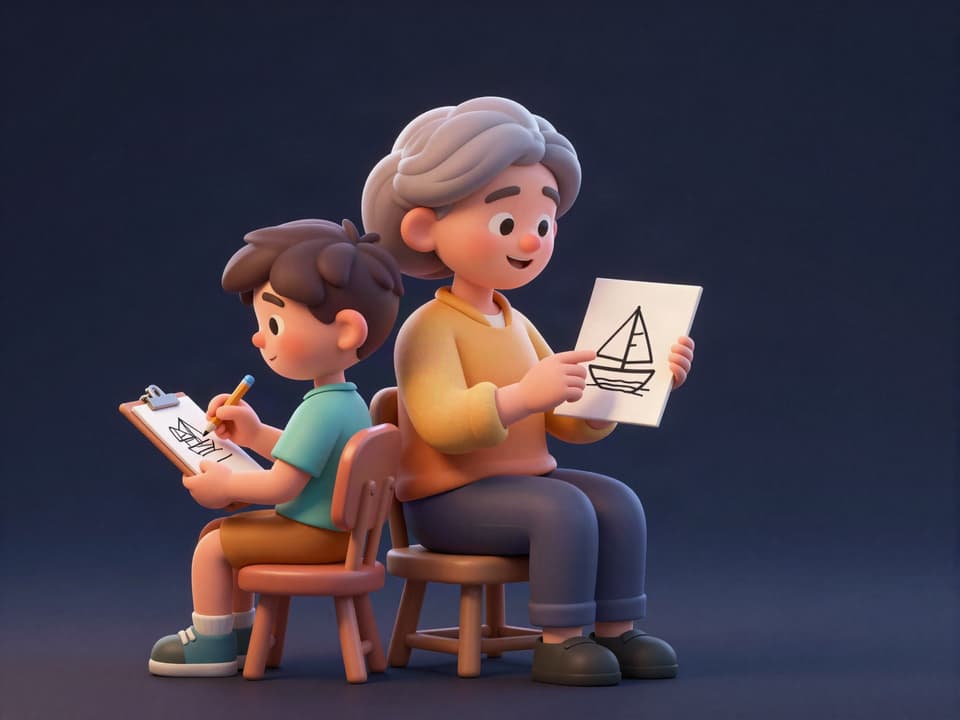
Describe a simple picture using words alone so that a partner, who cannot see it, can draw it as accurately as possible.
Why it fits: Played in pairs, it lets an adult and a child work as one team, and every pair ends with a picture to compare.
- 2–16 players
- 10–25 min
- Paper and pen
- Seated
- Works seated
Tell a story together, one word per person, and try to bring it to an ending that makes sense.
Why it fits: One word each is a turn nobody can get wrong, and the story bends towards whatever the children find funny.
- 3–12 players
- 5–20 min
- No materials
- Seated
- Works seated
Work out a secret person, place or thing by asking no more than twenty yes-or-no questions.
Why it fits: A calm game for the end, when the energy needs to come down. Keep the secrets to animals and things in the room.
- 2–10 players
- 10–25 min
- No materials
- Seated
- Works seated
Compare the games at a glance
| Game | Players | Play time | Prep | Materials | Movement | Seated option | Energy |
|---|---|---|---|---|---|---|---|
| Charades | 4–20 | 20–45 min | 3 min prep | No materials | Standing and moving | Yes | High energy |
| Who Am I? | 3–12 | 10–25 min | 2 min prep | Paper and pen | Seated | Yes | Lively |
| The Secret Winker | 6–20 | 10–20 min | 1 min prep | Paper and pen | Seated | Yes | Lively |
| Hum That Tune | 4–16 | 10–25 min | No prep | No materials | Seated | Yes | Lively |
| Picture Telephone | 4–10 | 15–30 min | 2 min prep | Paper and pen | Seated | Yes | Lively |
| Describe and Draw | 2–16 | 10–25 min | 5 min prep | Paper and pen | Seated | Yes | Calm |
| One-Word Story | 3–12 | 5–20 min | No prep | No materials | Seated | Yes | Lively |
| Twenty Questions | 2–10 | 10–25 min | No prep | No materials | Seated | Yes | Calm |
Times are editorial estimates, not test results.
More games that suit this occasion
Every other game in the library that is tagged for this occasion.
-
-
-
A forty-five minute plan for a children's party
Written for six to twelve children with at least two adults playing. Everything is seated except Charades, and nothing needs buying.
- Step 1 · 10 minutes
The Secret Winker
A circle and one sentence of explanation. Two or three rounds, with a new detective each time.
- Step 2 · 15 minutes
Charades
Two mixed teams, easy cards, forty-five seconds a turn. An adult whispers prompts to non-readers.
- Step 3 · 15 minutes
Picture Telephone
Pair every non-writer with an adult. Read every sheet aloud at the end.
- Step 4 · 5 minutes
Twenty Questions
Animals only — the calm landing before cake or home time.
About 45 minutes in total. Times are editorial estimates, not test results.
How we chose these games for kids
A party game for children is not a party game for adults with the words made easier. Children wait badly, lose badly and listen to rules for about one breath. We chose games against four criteria:
- Turns are short. Nobody waits more than a minute or two before doing something. Team games and whole-circle games do this best.
- Nobody is knocked out early. A seven-year-old who is out in the first minute has nothing to do for the next ten. Where a game removes players, as in The Secret Winker, a round lasts only a few minutes and everyone is back in.
- Reading is optional. Each rules page says what has to be read or written. Every pick here works for a non-reader, either as it stands or with a prompt whispered by a neighbour.
- Adults play too. These are not games to set up and walk away from. They are better, and calmer, with grown-ups in the teams.
The ages on this page are editorial judgements made from the rules, not test results. You know the children in your room better than we do.
What changes when children are playing
The explanation has to fit in one breath. Say the aim, play one practice turn and correct as you go. Charades needs only “act it, do not speak”; everything else can be learned in the first round.
A turn matters more than a win. Younger children care far more about having a go than about the score. Keep score loosely, or not at all, and make sure the order of turns is visible and fair — going round the circle is fairer than picking volunteers.
Reading and writing split the room. In a group of six-to-ten-year-olds some read fluently and some do not. Who Am I? and Picture Telephone both involve slips of paper, so pair each younger child with an older one or an adult and treat the pair as one player.
The room needs to be ready. Clear a patch of floor for acting, put the pens out before you start and decide where the finished drawings will go. Thirty seconds of looking for a pencil is long enough to lose the group.
Energy has a shape. Start with something that needs no explaining, put the loud game in the middle and finish seated. Ending on the noisiest game hands over-excited children back to their parents.
Running it without tears
- Say when the game ends before it starts. “Three rounds, then cake” prevents the argument about one more go.
- Mix the teams yourself. Count off round the circle so that friends and siblings are split and every team has an adult.
- Give everyone a way to pass. A child who freezes when it is their turn to act can choose a helper, swap the card or simply pass. Say so at the start.
- Praise the attempt. The funniest moment in Hum That Tune is usually the worst humming. Make that the point.
- Have a quiet job ready. Timekeeper, score-keeper or card-holder suits the child who would rather watch for a round.
Questions parents ask
What age are these games for?
From about six. Below that, Hum That Tune, One-Word Story and easy Charades work with an adult helping. From about ten, children can run most of these games themselves, and they enjoy being the one who explains.
How many adults do we need?
One adult to lead and at least one more inside the teams. For more than ten children, add a third so that every team has a grown-up in it. The adults should play properly; children notice at once when someone is only supervising.
What if a child will not join in?
Do not insist. Offer the quiet job, keep a chair free in the circle and carry on. Most children join by the second round, once they have seen that nobody is laughed at. A game like Twenty Questions, where the whole group answers together, is the easiest one to slip into.
Can these be played at a birthday party?
Yes. They need no prizes and no equipment beyond paper and pens. If you would like prizes anyway, give one to every team at the end and not to a single winner. For a wider choice, the game library lists every game with its group size and the materials it needs.