Eid Gathering Games: 8 Family Games for a House Full of Guests
An Eid visit fills a living room with grandparents, cousins and neighbours, and it may last twenty minutes or three hours. These games start fast, stop politely and leave nobody out.
The short answer
For an Eid gathering, choose games that seat every generation together and can pause whenever new guests arrive. Who Am I?, Hum That Tune and One-Word Story need almost no explaining; Charades and Fishbowl make a main event for the cousins; Would You Rather, Twenty Questions and Shared Connections keep the talk going over sweets and coffee.
The games we recommend
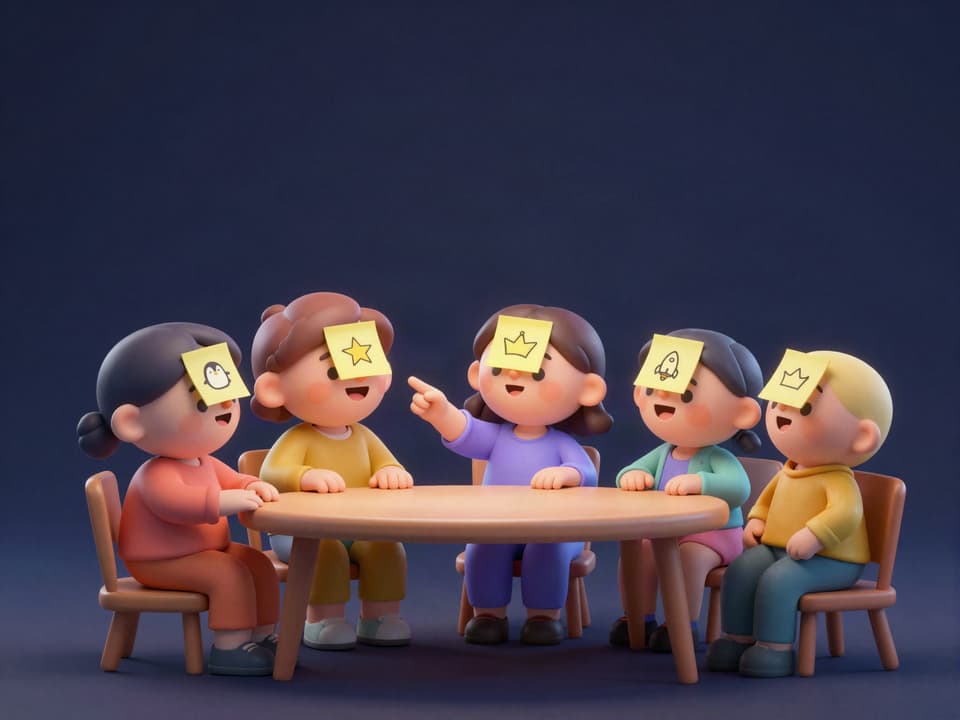
Work out the name stuck to your own forehead — which everyone can see except you — by asking yes-or-no questions.
Why it fits: Animals, professions and favourite dishes on foreheads: grandparents and children end up asking exactly the same questions.
- 3–12 players
- 10–25 min
- Paper and pen
- Seated
- Works seated

Hum a tune — no words, no la-la — until your team names it.
Why it fits: Celebration songs and childhood tunes are known by every generation in the room, and nobody needs to leave a seat.
- 4–16 players
- 10–25 min
- No materials
- Seated
- Works seated

Tell a story together, one word per person, and try to bring it to an ending that makes sense.
Why it fits: A story told one word at a time fits between two rounds of coffee and absorbs each new arrival as they sit down.
- 3–12 players
- 5–20 min
- No materials
- Seated
- Works seated

Act out a word or phrase without speaking so your team can guess it before the timer runs out.
Why it fits: The main event for the cousins. Announce the category before every turn so that the oldest guests can guess too.
- 4–20 players
- 20–45 min
- No materials
- Standing and moving
- Seated variation

In a small group, find three things you all have in common that nobody could tell just by looking at you.
Why it fits: Small groups look for what they have in common — the kindest way to introduce a new in-law or a neighbour.
- 4–40 players
- 10–20 min
- No materials
- Standing optional
- Seated variation

Work out a secret person, place or thing by asking no more than twenty yes-or-no questions.
Why it fits: Quiet enough for a room in which other conversations are going on, and it can stop mid-round for a greeting.
- 2–10 players
- 10–25 min
- No materials
- Seated
- Works seated
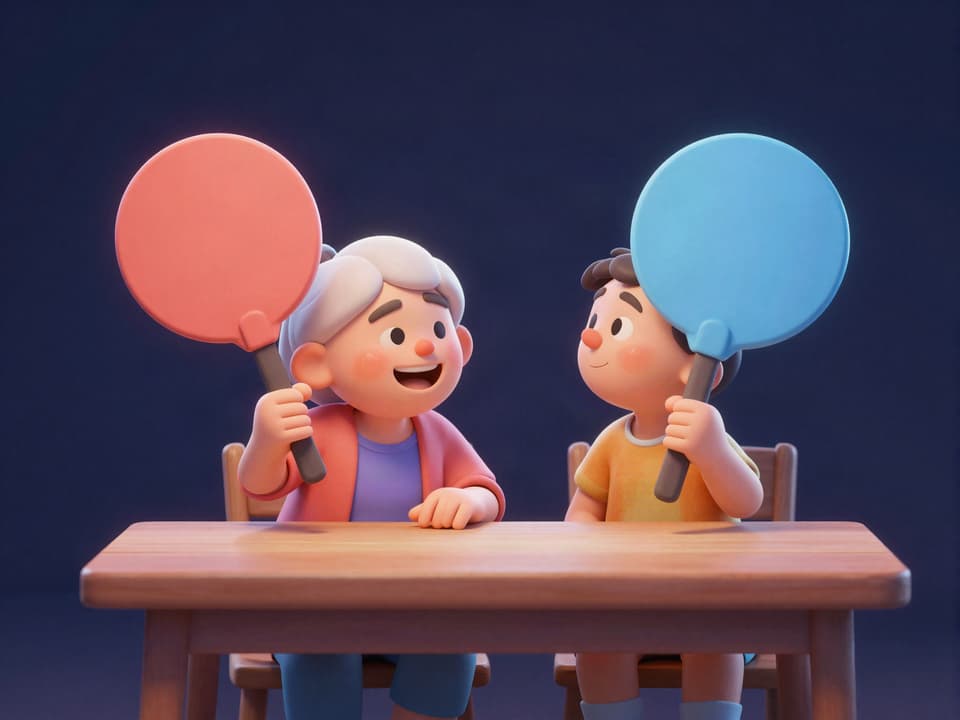
Choose between two alternatives, defend your choice, and find out who at the table thinks the way you do.
Why it fits: Asked to the whole room over sweets, it gets teenagers and uncles arguing on the same side.
- 2–30 players
- 10–30 min
- No materials
- Seated
- Works seated
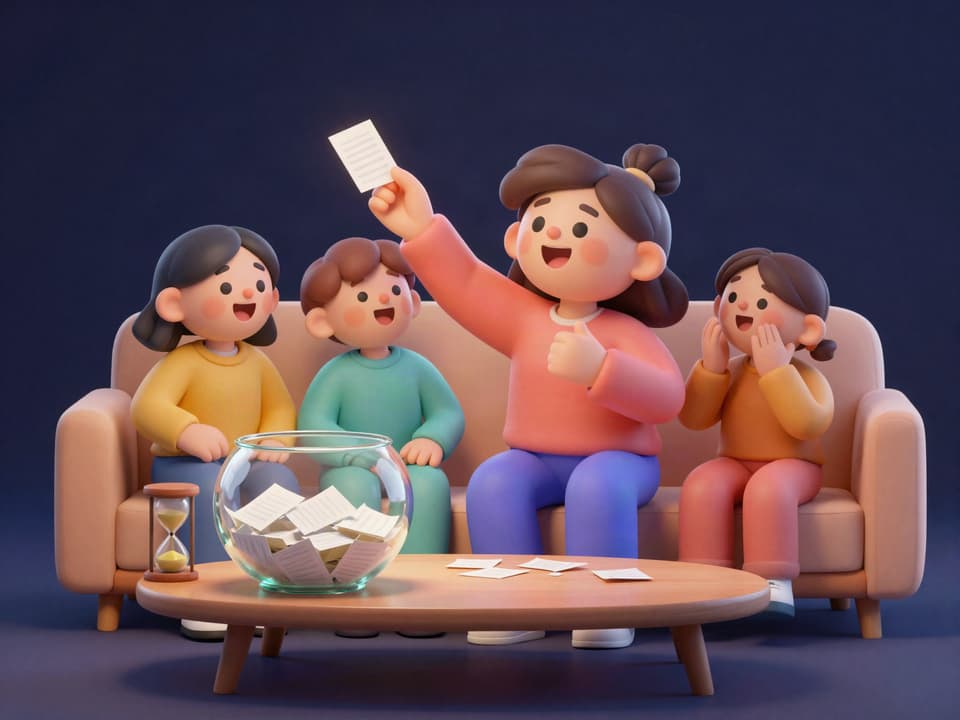
Get your team to guess the same bowl of words three times over — first by describing, then with a single word, then by acting.
Why it fits: When the house is full and nobody is leaving soon, three rounds with the family's own slips fill an afternoon.
- 4–20 players
- 25–45 min
- Paper and pen
- Standing optional
- Seated variation
Compare the games at a glance
| Game | Players | Play time | Prep | Materials | Movement | Seated option | Energy |
|---|---|---|---|---|---|---|---|
| Who Am I? | 3–12 | 10–25 min | 2 min prep | Paper and pen | Seated | Yes | Lively |
| Hum That Tune | 4–16 | 10–25 min | No prep | No materials | Seated | Yes | Lively |
| One-Word Story | 3–12 | 5–20 min | No prep | No materials | Seated | Yes | Lively |
| Charades | 4–20 | 20–45 min | 3 min prep | No materials | Standing and moving | Yes | High energy |
| Shared Connections | 4–40 | 10–20 min | 1 min prep | No materials | Standing optional | Yes | Lively |
| Twenty Questions | 2–10 | 10–25 min | No prep | No materials | Seated | Yes | Calm |
| Would You Rather | 2–30 | 10–30 min | No prep | No materials | Seated | Yes | Calm |
| Fishbowl | 4–20 | 25–45 min | 5 min prep | Paper and pen | Standing optional | Yes | High energy |
Times are editorial estimates, not test results.
More games that suit this occasion
Every other game in the library that is tagged for this occasion.
-
-
-
An afternoon visit
For eight to twenty relatives of all ages. Every game here can be paused when the doorbell rings and picked up again with the newcomers included.
- Step 1 · 10 minutes
Would You Rather
While the sweets and coffee go round. Hands up for the first choice.
- Step 2 · 15 minutes
Who Am I?
Mixed ages. Let the children write the names for the adults.
- Step 3 · 15 minutes
Hum That Tune
Two teams, with grandparents and children mixed in each.
- Step 4 · 10 minutes
One-Word Story
Once round the whole room, starting with the oldest guest.
About 50 minutes in total. Times are editorial estimates, not test results.
How we chose these games for Eid
An Eid gathering is not a party with a start time and a plan. Guests come in waves, families cross on the doorstep, and the host is busy with trays. A game has to earn its place in that. We chose against four criteria:
- They start in under a minute. Nobody will sit through an explanation while the coffee goes cold. Every pick can begin with one sentence and a practice turn.
- They pause politely. When the doorbell rings, everyone stands to greet. Each game here can stop mid-round and carry on, or restart with the newcomers in it.
- Every generation plays the same game. Grandparents, parents, teenagers and small children are in one room. These games do not send the children off to another table.
- They suit good clothes and a full room. Nobody should have to sit on the floor, run or clear the furniture. All but two are seated, and those two have a seated version on their rules pages.
Every game is clean and needs, at most, paper and a pen.
What an Eid visit asks of a game
Guests arrive in waves. A game that needs everyone present from the start will never begin. One-Word Story and Would You Rather take a new player the moment they sit down, without stopping.
Hospitality comes first. Food, greetings and conversation are the visit; games fill the lulls between them. Offer a game when the talk slows, and drop it without ceremony when a new family arrives.
The oldest guests set the pace. Choose games in which grandparents have an advantage. In Hum That Tune they know songs nobody else does, and in Twenty Questions patience beats speed.
Children have been waiting all day. They are dressed up, full of sweets and short of things to do. Give them the busy roles — writing the names for Who Am I?, holding the bowl for Fishbowl, keeping the score.
Some guests have only just met. A new in-law, a neighbour or a friend from work may know one person in the room. Shared Connections gives them something to talk about with three strangers at once.
Making it work in a full house
- Keep everyone seated. Play Charades in its seated form, with the actor using only hands and face, so that nobody needs to move the furniture.
- Use the family as the theme. For Who Am I? and Fishbowl, ask for names of relatives’ favourite dishes, family places and shared memories. The game becomes about the people in the room.
- Mix the teams by age. One grandparent, one parent and one child in each team. It splits the cousins up and gives the elders a real role.
- Play short. Ten or fifteen minutes at a time. Another family will arrive, and a short game ends well instead of being abandoned.
- Let the host sit down. Ask an older cousin to lead, so that the person who has been cooking can play.
Questions hosts ask
Which games suit grandparents best?
Hum That Tune, Twenty Questions and One-Word Story. All three are seated, spoken and unhurried, and none needs small print to be read. The games for older adults collection goes further.
What can the children do while the adults talk?
Give a group of cousins paper and pens for Picture Telephone or Describe and Draw. Both run themselves once they have started, and the finished sheets are worth showing to the adults afterwards.
How do we include guests who arrive late?
Choose games without fixed teams or a running score. In Would You Rather, One-Word Story and Who Am I? a newcomer takes the next turn. In Fishbowl, hand them three slips to write and add them to the bowl.
What if the visit is very short?
Play one thing. A single round of Would You Rather takes five minutes and still gives the room something to laugh about together.
For a large family gathering at any other time of year, see the family reunion games collection.